Defeating Liability Waivers Resulting in $12M Settlement

June 05, 2015

In the case of Adkins v. Big Dipper Charters, et al., Case No. 14-cv-10030-KlNG, the plaintiffs alleged the Florida Keys Dive Center caused the Adkins family economic and non-economic damages, including pain, suffering and past and future lost income. The Florida Keys Dive Center and its boat operator Big Dipper Charters Inc., along with the boat captain, owners and dive master, were named in the suit. The lawsuit alleged the dive master told the father and son team to "dive, dive, dive," then failed to communicate to the boat captain that there were divers in the water. The captain put the boat in reverse, and the propellers struck a boy and his father, causing severe traumatic injuries.

As expected, the defense argued their clients were protected by liability waivers signed by the father for both himself and his son that are common in dive boat operator forms. The plaintiffs argued the liability release forms signed were void because they violated several provisions of federal and state law. The plaintiffs set out several state and federal stator violations undertaken by the defendants which all ultimately boiled down to failure to have a proper lookout.

The defendants also asserted a limitation of liability defense. This limits a boat owner's liability to the value of the vessel, post incident. In this case the vessel had a value of about $250,000. The plaintiffs argued that the limitation of liability did not apply because the vessel was not seaworthy, which is also defined generally as a vessel that is fit for its intended purpose. The plaintiffs were participating in a drift dive, where divers follow the current. However it was alleged that the dive master and boat captain had no method of communication other than yelling or stomping on the deck to signal. Thus, it was argued that the combination of drift diving without a method of communication and without a direct line of sight to the back of the vessel created a situation where the captain decided to maneuver the vessel around without knowing there were people in the water, which ultimately lead to the accident.

The Daily Business Review reports that the settlement was reached during a 15-hour mediation. Reportedly, the son will receive $11 million of the settlement and his father will receive $1 million. The settlement now has to be approved by the court, given the son is a minor.

If you are interested in learning more about this case or wish to reach me, you may write to me at mov@chaloslaw.com.

WISTA USA AGM Takes Manhattan

The WISTA USA 2015 AGM and Conference was held Friday, May 15, 2015 and hosted by the New York/New Jersey Chapter of WISTA USA. The topics discussed included Emerging Challenges Facing Shipping. A link of the notice is here => WISTA USA 2015 AGM.

For those not familiar with WISTA, the Women's International Shipping and Trading Association,  is a networking organization for women at management level in the maritime industry. WISTA mission statement holds that WISTA shall:

  • Facilitate the exchange of contacts, information and experiences among its members
  • Promote and facilitate the education of its members
  • Provide liaison with other related institutions and organizations worldwide

WISTA's vision is that shall be acknowledged as a professional and highly reputable shipping organization with focus on improving levels of competency in the shipping industry and shall:

  • Attract highly qualified people to the industry
  • Attract highly qualified people to the organization
  • Improve level of competency through focus on education and knowledge  

For those that have not attended a WISTA USA AGM, it begins with leadership meetings the day before. On the day of the AGM, there is a business meeting for WISTA members only, which lasts approximately 3 hours. The business of WISTA USA is discussed, items are voted on and chapters provide their chapter reports. Yours truly delivered the WISTA Florida chapter report, along with Lesley Karentz, my co-president for WISTA Florida.

The morning AGM is followed by a lunch and afternoon conference presentations. The presentations this year included presentations on:
 
Current Price of Crude Oil and its Impact on the Shipping Industry
Key Note Speaker:  Peter B. Evensen, President and CEO Teekay Corporation

Cybersecurity Session with Q&A 
Captain Andrew Tucci, U.S. Coast Guard, Chief, Office of Ports and Facilities: Cybersecurity issues within the marine transportation system and the Coast Guard response
Emilian Papadopoulos, President, Good Harbor Security Risk Management, LLC: Cybersecurity, an industry perspective. How companies should prepare for the inevitable: a successful breach

Emerging Challenges Facing Shipping 
Joseph Hughes, Chairman & CEO, The American Club: Bluewater blues: the insurance response to challenging times for the maritime transportation industry.
Captain Melissa Bert, Chief of Staff, United States Coast Guard Seventh District: Emerging regulatory issues in the maritime community (Member WISTA Florida!)
Nathalie Sykora, VP Global Technical Services at The CSL Group Inc.: Is your technical operations team ready to face future challenges?  An owner's perspective based on recent shipbuilding projects and transition to operations.
Lois Zabrocky, Senior Vice President and President of the International Flag Strategic Business Unit OSG Ship Management

The Conference wraps up with an AGM dinner--this year, it was at the fabulous India House. The India House came into being as an organization in 1914 when a group of businessmen headed by James A. Farrell, then president of United States Steel Company, in collaboration with Willard Straight, decided to create a meeting place for the interests of foreign trade. Presidents of the Lackawanna Steel Company, Dollar Steamship Company, W.R. Grace Shipping, Chase National Bank, and United States Rubber all became Governors of India House and remained active during its first two decades. The dinner was had in the properly named "Marine Room".

For more information on the impact of WISTA, you might be interested in reading the interview of our WISTA USA President, Alex Anagnostis-Irons, a fellow WISTA Florida member here =>

WISTA Takes Manhattan

At this event, I announced my intent on exploring a book on women in the shipping industry. I am in the process of outlining such a book and took away much inspiration from the AGM. Many of the ladies had great stories to share. If you are interested in reaching me, have a story to share with me or want more information on WISTA, feel free to contact me at mov@chaloslaw.com.

Maritime Law--Ferries Between Florida and Cuba Now Licensed in U.S.

May 06, 2015

According to several news sources, passenger ferries could be set to run between Florida and Cuba for the first time in more than 50 years after the U.S. government approved 5 new ferry services on May 5, 2015. The U.S. Treasury granted licenses to at least five American companies to operate ferry services to Cuba for the first time in more than a half century, potentially bringing the former Cold War antagonists closer. These companies include Airline Brokers Co. of Miami, Baja Ferries USA, Havana Ferry Partners, United Caribbean Lines and America Cruise Ferries of Puerto Rico. Services between the two countries had stopped in 1960 when the U.S. imposed a trade embargo on Cuba. However, the U.S. announced the restoration of diplomatic ties in December 2014, an issue I have blogged on before.

President Obama shakes hands with Cuban President Raul Castro at April's Summit of the AmericasPhoto AP 

President Obama shakes hands with Cuban President Raul Castro at April's Summit of the Americas
Photo AP
 

These granted licenses do not necessarily mean that ferries will start launching for Cuban shores any time soon, as there are bureaucratic hurdles to overcome in both countries. The proposed ferry services must still obtain Cuba’s approval, but certainly, the U.S. move clears the way for negotiations.  It is unclear at this point how receptive Cuba’s government would be, as it seeks to balance economic benefits with concerns that any sudden change could endanger the island’s one-party rule. 

The proposed ferry services would be able to take passengers in 12 approved categories, including family visits, educational, cultural and religious activities. While President Obama has eased restrictions on travel between the two countries, tourism is still not permitted. The idea set out by the ferry services is to attract passengers with tickets that are cheaper than airplane fares and large free baggage allowances. It is difficult to see how the ferry services can state they are able to offer cheaper prices than the airlines, when they do not know the costs on the Cuban side of the equation. 

There could be a further stumbling block on this idea, as it is reported in the Miami Herald that Cuba does not allow people born on the island to arrive or depart from Cuba by water. Cuba would need to change that law if these ferry operators hope to be able to undertake these services. 

If you are interested in receiving a copy of the Miami Herald article on this news or wish to reach me, you may write to me at mov@chaloslaw.com.

Maritime Law--Carnival's Week is a "Draw"--Won One, Lost One

April 28, 2015

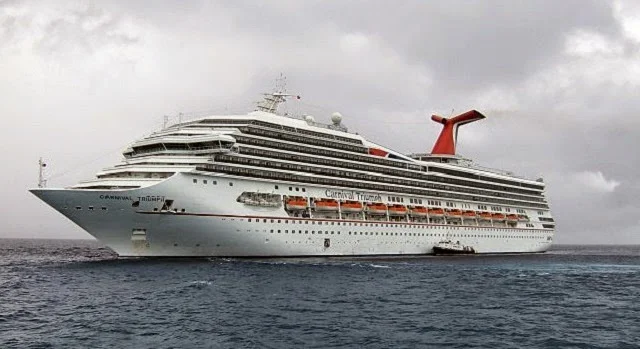
In a case lost by Carnival, Terry v. Carnival, case no.: 1:13-cv-20571, a group of passengers whose four-day cruise turned into a nightmare in February 2013 have been awarded compensation by a court. The CARNIVAL TRIUMPH broke down after an engine fire, crippling its propulsion, electrical and plumbing systems. Passengers sued Carnival Corp., claiming they endured three days of deplorable, unsafe, unsanitary and hot conditions, including a lack of working toilets. The allegations were that the company knew the ship was not seaworthy even before an engine room fire knocked out power and created overflows of raw sewage.
The passengers accused Carnival of breach of maritime contract for failing to provide them with safe passage on a seaworthy vessel, adequate food and sanitary and safe living conditions, and also alleged the company committed fraud and made negligent misrepresentations about a luxurious, stress-free vacation.

Shortly after the incident, Carnival said that all guests on the voyage wound receive a full refund of the cruise and transportation expenses, a credit to spend on a future cruise of equal value, reimbursement of all purchases made onboard — except for money spent at the ship's casino — and additional compensation of $500 per person.

Defense counsel argued that, under the circumstances, the ship's crew handled the unexpected situation very well, and there was adequate medical care, food and water onboard. The court found otherwise, awarding the group $118,500 in total damages.

CARNIVAL TRIUMPH

CARNIVAL TRIUMPH

In a case won by Carnival, Lancaster v. Carnival, case no.: 1:14-cv-20332, a cruise passenger, Kenneth Lancaster sued Carnival Corp. after he allegedly tripped and fell over luggage in a crowded cruise ship corridor in October 2012. Lancaster claimed he injured his head. The plaintiff's maritime safety expert opined that Carnival's debarkation procedures were not reasonable under the circumstances.

Carnival's liability expert opined that both the luggage and the group of people in the corridor were open and obvious conditions. The jury sided with Carnival, finding the cruise ship owner was not negligent in the manner claimed by Lancaster.

Carnival seems to have obtained a neutral week with these two cases. If you are interested in contacting me or wish to receive copies of the orders in these case, please feel free to contact me a mov@chaloslaw.com.