
Maritime Law--The Legal Ramifications of Hard-A-Port

October 13, 2014

Brought to my attention by our friends at Shiptalk Ltd is a video of the Hapag-Lloyd containership COLOMBO EXPRESS turning hard-a-port into the MAERSK TANJONG. Both vessels were heading south through the Suez Canal, with the COLOMBO EXPRESS seemingly attempting to overtake the MAERSK TANJONG. Then about 2 1/2 minutes into the seemingly normal maneuver and with no warning at all, the overtaking vessel lurches to port and slammed its bow into the side of the unsuspecting Maersk vessel.

Hapag-Lloyd noted in a statement there were no injuries or pollution as a result of the incident. A Maersk Line spokesperson said that three containers were lost over the side from their ship. You can watch the video here => Containership Collision. While I do not speak fluent Arabic, people can be heard shouting off-camera as the two vessels gradually crash. Three shipping containers fell into the water as a result of the impact, and the COLOMBO EXPRESS was also left with a 65-foot dent, Reuters reports. No causalities were reported.

Photograph taken from www.vesselfinder.com.

Photograph taken from www.vesselfinder.com.

The Suez Canal in Egypt connects the Mediterranean Sea with the Red Sea, allowing ships sailing between Europe and Asia to bypass traveling around Africa. It is one of the most heavily used trade routes on the globe, providing reportedly providing the country with roughly $5 billion in annual revenue, according to Reuters. Ship traffic was reportedly halted in the Canal for three hours.


It is reported that both ships had pilots on board and would have been speaking by radio to each other during the passage. Any thoughts on legal causation? If you do, send me an email at mov@chaloslaw.com.
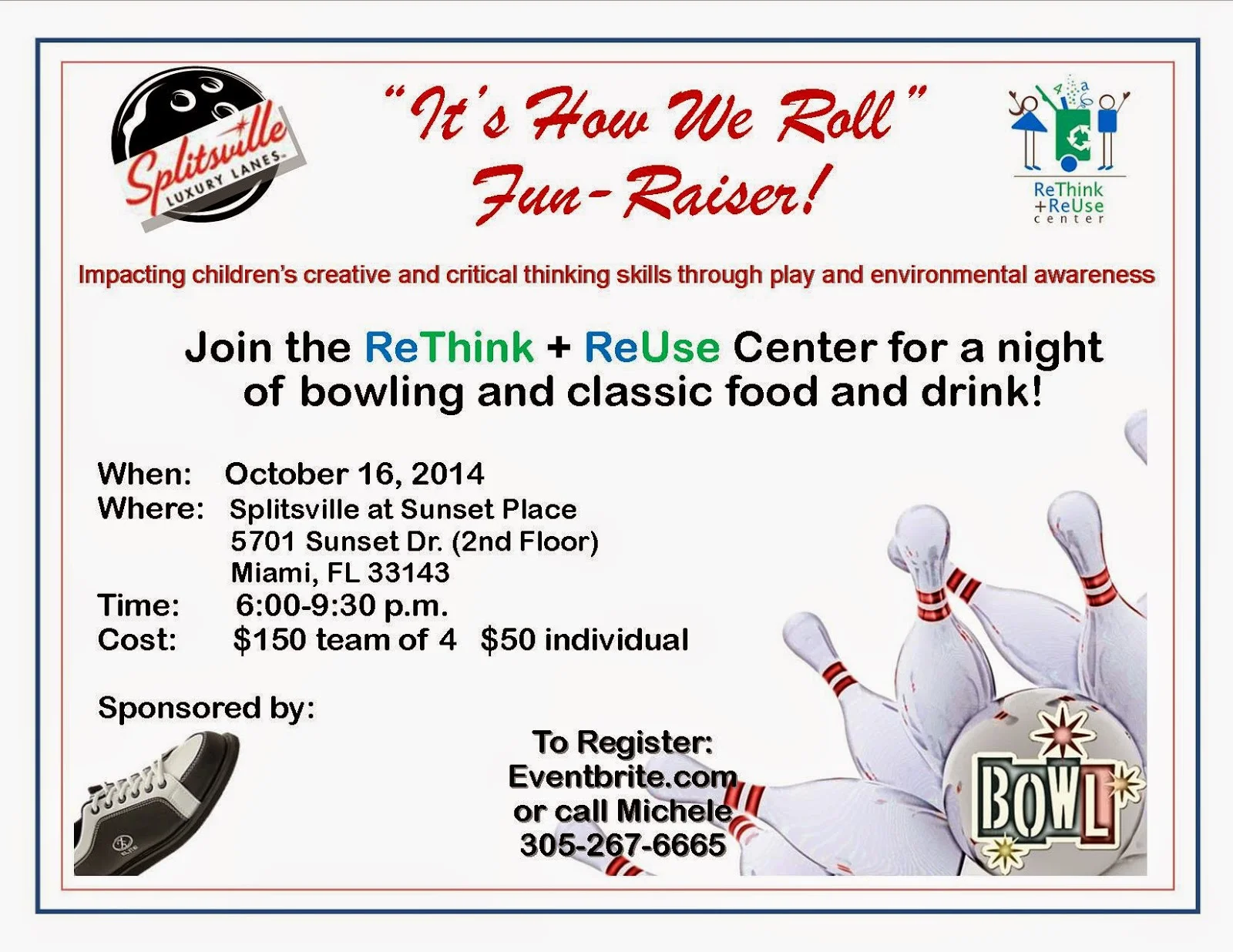
ReThink + ReUse Center "It's How We Roll" Fun Raiser -- Bowling Night -- October 16, 2014

As many of my readers may be aware, I am the Chair of the ReThink + ReUse Center, a non-for-profit educational and environmental Center in Miami educating children into rethinking reuseable materials for learning through play. The ReThink and ReUse Center’s Quality Play is Learning Program provides a series of educational and participatory workshops based on the philosophies of Reggio Emilia and Harvard's Project Zero Visible Thinking. The Children’s Trust is the major funder of this program, but the Center is required to continually fundraise for the balance its annual budget.

The Center is having a fun event you are invited to--the ReThink + Reuse Center’s “It’s How We Roll” bowling event on October 16, 2014 at Splitsville Luxury Lanes from 18:00 to 21:30 hours. My firm, Comcast and Waste Management are major sponsors for this event, but we could use a few more sponsors. If you are interested in sponsoring the event, please let me know by reaching me at mov@chaloslaw.com. Otherwise if you prefer to bowl, above is the handout for the event.  Or, you can sign up by following the link here => ReThink + ReUse Bowling Event.

This is an excellent networking event, as several organizations have put forth teams. Make it competition in your own organization to see who can create the biggest teams. There will be unique prizes given and you will have fun while supporting a great cause.

Join us for this event to show that you and your company support our local charities!

Maritime Law--Cruise Plaintiffs Must Read Their Ticket to Figure Out Venue or Risk Dismissal

October 09, 2014

In Royal Caribbean Cruises, Ltd. v. Clarke, 2014 Fla. App. LEXIS 15655 (Fla. 3d DCA Oct. 8, 2014), the Third District Court of Appeal, which encompasses Miami-Dade County, ruled that where a defendant cruise line reasonably communicated to the plaintiff that there was a forum selection clause in the ticket contract before the plaintiff boarded vessel, the trial court erred in denying defendant's motion to dismiss for improper venue. The Court further found that although the forum selection clause stated that all disputes shall be litigated in United States District Court for the Southern District of Florida, defendant had no obligation to remove state court case to federal court.

In this case, the plaintiff, while she apparently filed her lawsuit timely, filed it in the wrong court. The plaintiff attempted to argue that it was up to the defendant to remove the lawsuit if it wanted to assert the forum selection clause. The court rejected this argument, finding that the court has previously recognized dismissal as the proper mechanism to enforce a forum selection clause in a contract.

If you are interested in receiving a copy of this decision or wish to contact me, you may do so by writing to me atmov@chaloslaw.com

Maritime Law--En Banc 5th Circuit Rules Punitive Damages NOT Allowed in Jones Act Cases


September 25, 2014

In the long awaited en banc decision of McBride v. Estes Well Services, LLC, No. 12-30714 (Sept. 25, 2014), the Fifth Circuit Court of Appeals had to decide whether seaman plaintiffs, two injured seamen and the personal representative of a deceased seaman, could recover punitive damages under either the Jones Act or the general maritime law of the United States. The en banc Court affirmed the district court and concluded that the case was controlled by the SCOTUS decision in Miles v. Apex Marine Corp., which holds that the Jones Act limits a seaman's recovery to pecuniary losses where liability is predicated on the Jones Act or unseaworthiness. Because punitive damages are non-pecuniary losses, punitive damages were not recoverable in the case.

The 73-page decision is interesting, as there are two separate concurring opinions for the 8 judges in the majority and two separate dissenting opinions by 6 judges. Care was taken in this decision, as several circuits hold that the Miles proscription on non-pecuniary damages applies. However, the broad holding of Atlantic Sounding Co. v. Townsend, 2009 AMC 1521 (2009), held that the proscription against awards of non-pecuniary damages recognized inMiles does not apply to actions brought under the general maritime law. The first Fifth Circuit panel in McBride, citing Atlantic Sounding, held that the general maritime law allows awards of punitive damages outside of the context of the Jones Act and Death of the High Seas Act.

In the death action, the en banc majority found that the facts in McBride were indistinguishable from the facts in Miles.  Therefore, as Miles limited survivor damages to their pecuniary losses, the personal representative of the deceased seaman was equally limited to pecuniary losses. Quickly turning to the injury plaintiffs, the Court pointed out that the Jones Act applied to injured seaman as well as those killed through the negligence of their employer. The Court further noted that "no one has suggested why [the Miles] holding would not apply to an injury case such as those asserted by [the injury plaintiffs]."

In addressing Atlantic Sounding, the Court noted that SCOTUS did not overrule Miles and "took pains to distinguish" maintenance and cure claims from the claims in Miles and equally, the case before the Court.

Given this latest decision and the inconsistent construction of the proscription against non-pecuniary damages in Miles, watch this space--this case will attempt to make its way to the Supremes.

If you are interested in receiving a copy of this decision or wish to reach me, you may do so by writing to me at mov@chaloslaw.com.